


© All rights reserved. Powered by erfan.fr
In the year 2000, Kobe Bryant wasn’t just a player; he was a phenomenon. As he led the Los Angeles Lakers toward a historic Three-Peat, he needed a shoe that matched his clinical, futuristic approach to the game. Enter The Kobe (now known as the Crazy 1)—a sneaker that abandoned the “90s baggy” look for something much more aggressive, metallic, and polarizing.
While the design team famously drew inspiration from the Audi TT Roadster, the shoe was built specifically to house the explosive athleticism of a young Number 8. It was designed “from the outside in,” mimicking the seamless, aerodynamic shell of a German sports car.
Kobe famously wore the “Sunshine” yellow and “Stormtrooper” white colorways during his most dominant early championship runs. The blunt “toaster” toe box and the molded, stitchless upper became the visual shorthand for Kobe’s transformation from a high-flying dunker into a calculated, championship-winning machine.
After Kobe moved to Nike in 2003, adidas rebranded the silhouette as the Crazy 1. The name is a tribute to the “crazy” ambition of the design—a shoe that looked like a spaceship among leather high-tops. Today, the Crazy 1 stands as a monument to the “Frobe” era: a time of gold jerseys, afro-tapers, and the beginning of the most relentless work ethic in sports history.
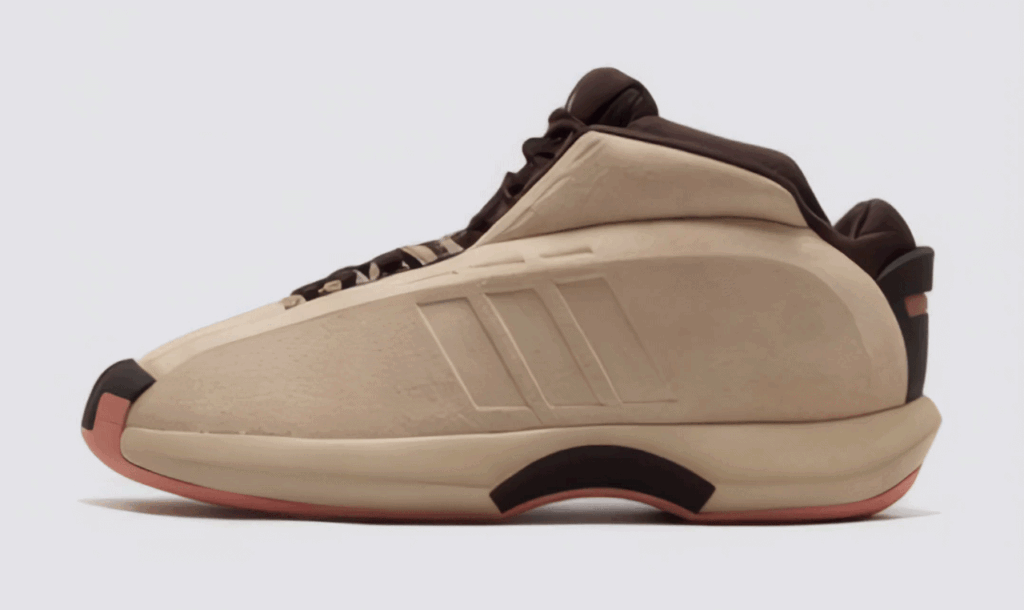
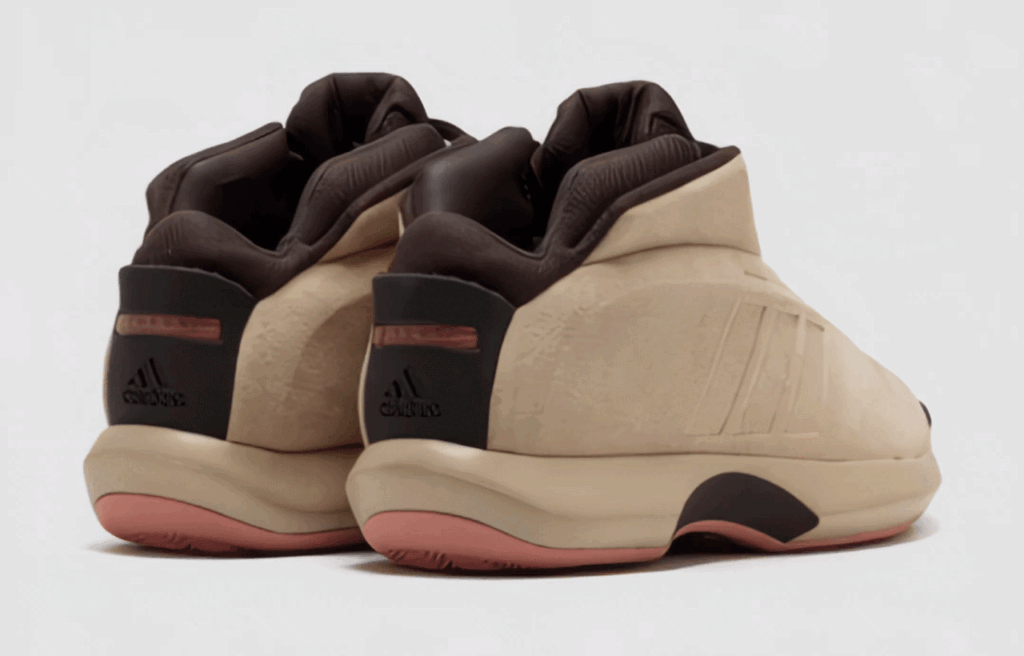
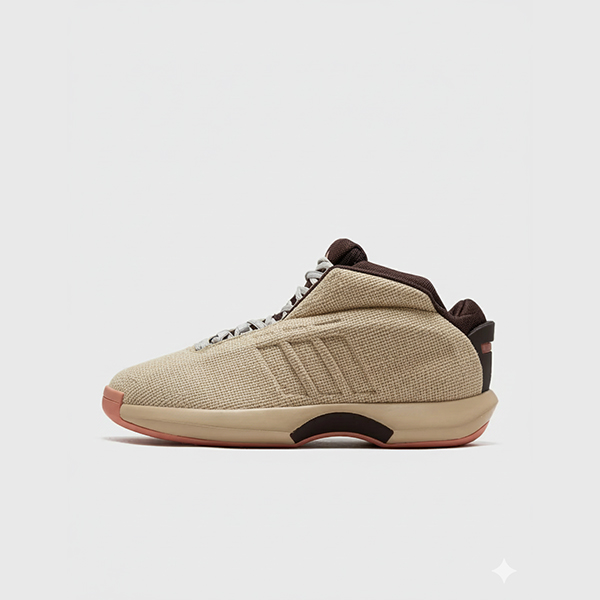
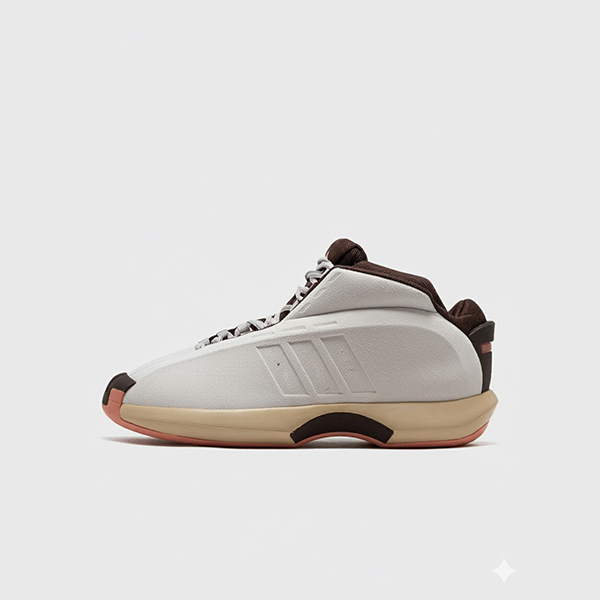
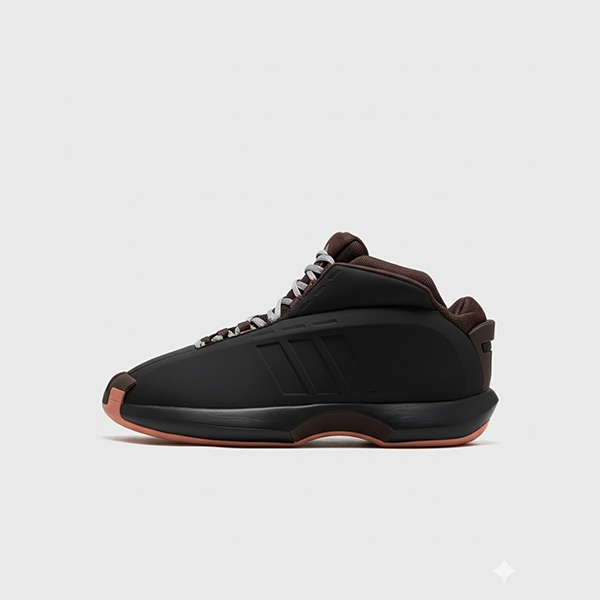
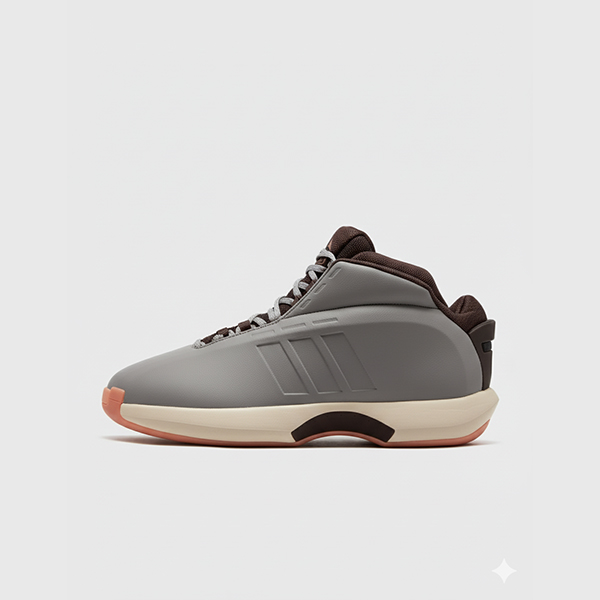
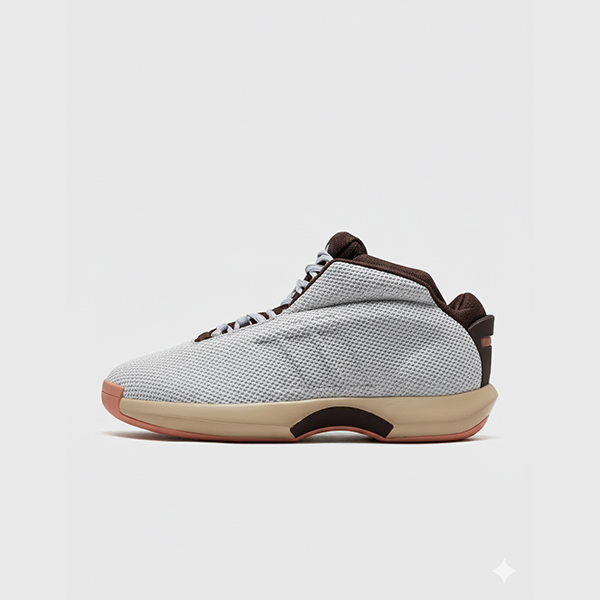
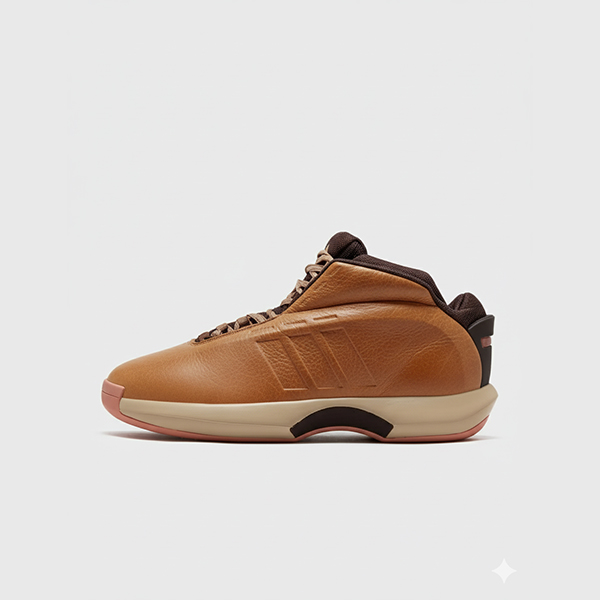
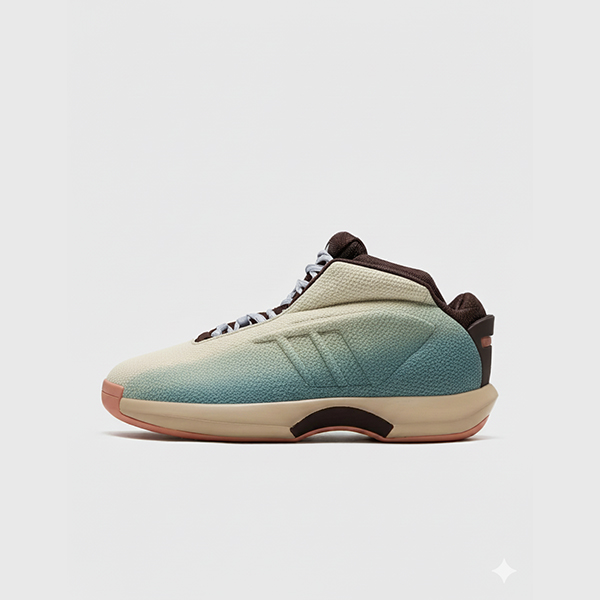
This project was an exercise in Hybrid Digital Design, merging industry-standard motion tools with generative AI to push the boundaries of product visualization. The goal was to take the iconic, Audi-inspired silhouette of the adidas Crazy 1 (The Kobe) and perform a high-fidelity material study that honors its Y2K futurism.
Instead of traditional 3D texturing, I utilized Nano Banana 2 (Gemini 3 Flash Image) to generate the core visual assets.
Photoshop: Used as the primary engine for “clean plate” generation and texture manipulation. I refined the AI-generated outputs, correcting geometry where necessary and creating custom displacement maps to ensure the materials felt grounded in the sneaker’s unique “car-body” shape.
Illustrator: Handled the technical precision. I built out the vector-based UI elements, schematic overlays, and branding assets to give the video its “blueprint-to-reality” aesthetic.
The final sequence was assembled in After Effects, utilizing rotoscoped assets to isolate the sneaker’s silhouette for complex layering. I integrated custom motion graphics and typography to anchor the visuals in a technical, schematic aesthetic. To enhance the atmosphere, I developed a custom lighting rig and a particle system to simulate stylized confetti, applying a posterized effect to bridge the gap between high-fidelity 3D and a gritty, retro-pop finish.
We use cookies to improve your experience on our site. By using our site, you consent to cookies.
Manage your cookie preferences below:
Essential cookies enable basic functions and are necessary for the proper function of the website.
Google Tag Manager simplifies the management of marketing tags on your website without code changes.
Statistics cookies collect information anonymously. This information helps us understand how visitors use our website.
Google Analytics is a powerful tool that tracks and analyzes website traffic for informed marketing decisions.
Service URL: policies.google.com (opens in a new window)
SourceBuster is used by WooCommerce for order attribution based on user source.